
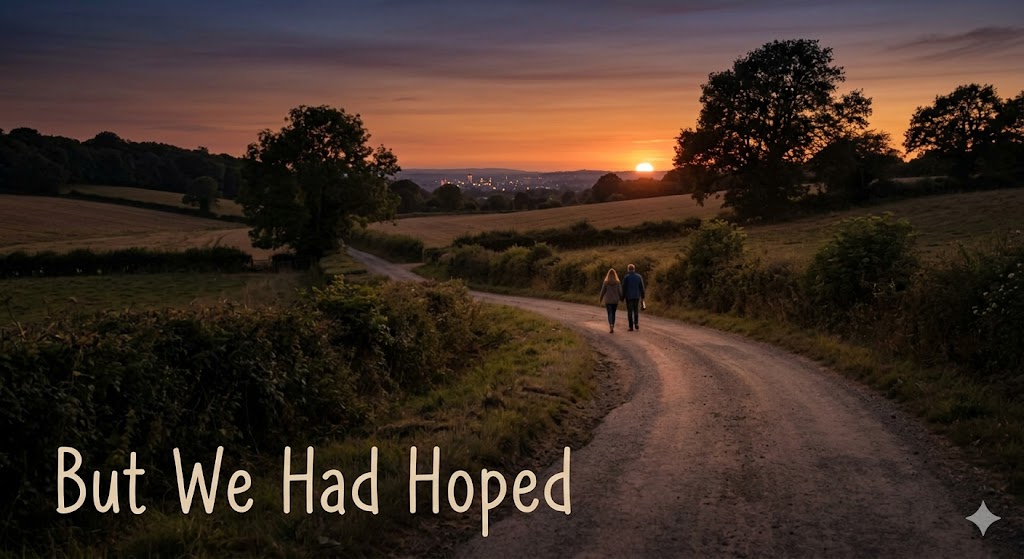
There’s a moment in the Easter story that doesn’t get nearly enough attention.
It’s not the empty tomb. Not the angels. Not even the triumphant shouts of “He is risen.”
It’s a quiet, seven‑mile walk away from Jerusalem.
On Easter evening, two disciples leave the city behind. They walk toward a village called Emmaus, talking through grief that hasn’t had time to soften yet. Luke tells us almost nothing about their conversation—except for one devastatingly honest line: “But we had hoped.”
That sentence carries the weight of crushed expectations, unanswered prayers, and faith that feels thin. And if we’re honest, many of us know that road well.
When “We Had Hoped” Becomes a Prayer
The story of the Road to Emmaus (Luke 24:13–35) isn’t just about recognizing Jesus after the resurrection. It’s about what faith looks like before clarity arrives.
Cleopas and their companion had believed Jesus would redeem Israel. They had imagined liberation, healing, and transformation. Instead, they watched Rome execute him. By Easter evening, resurrection rumors sounded more confusing than comforting.
We had hoped.
That’s not weak faith. It’s honest faith spoken out loud. It’s what happens when reality doesn’t match our theology yet. Many Christians and spiritual seekers carry that same quiet grief:
- We had hoped healing would come by now
- We had hoped the prayer would be answered
- We had hoped faith would feel easier
The Emmaus story refuses to rush past disappointment. Resurrection, in Luke’s telling, does not begin with certainty. It begins with walking.
A Risen Christ Who Joins the Walk
Here’s the surprising part: Jesus is already there.
Luke tells us that the risen Christ comes near and walks with them, but they don’t recognize him. Jesus doesn’t interrupt their grief with correction or explanation. He doesn’t demand belief. Instead, he asks a question: “What are you talking about as you walk along?”
Before offering hope, Jesus offers presence.
Luke describes Jesus as a paroikos—often translated “stranger.” The word carries the idea of a resident foreigner, someone who dwells alongside but doesn’t quite belong. Cleopas assumes Jesus must be an outsider, unaware of everything that just happened.
And yet, they keep talking. They tell this stranger the whole story.
There’s something deeply pastoral here. Grief can crack us open. It can make space for conversations we wouldn’t otherwise have. On the Emmaus road, Jesus doesn’t reveal himself immediately—but he does listen. The resurrection doesn’t erase trauma. It walks into it.
Scripture Reframed Without Erasing the Wound
As they walk, Jesus reflects on the Scriptures—not to scold them, but to reframe the story they’re living inside. Luke says he interprets the law and prophets “concerning himself,” weaving suffering and hope together rather than pitting them against each other.
This matters for modern readers. The resurrection doesn’t pretend the past three days didn’t happen. It doesn’t spiritualize the crucifixion away. Instead, it tells the truth and then stretches that truth forward.
Faith after disappointment often needs reframing more than fixing. Not answers that shut questions down—but meaning that can hold both grief and hope at the same time.
The Holy Moment Happens at the Table
When the three reach the village, Jesus acts as though he will continue on. The disciples stop him: “Stay with us,” they say. It’s late. The day is ending.
At the table, something shifts.
Jesus takes bread. Blesses it. Breaks it.
And then—they know.
Luke is careful here. Their eyes are opened, and they recognize him—but those aren’t presented as the same moment. Recognition doesn’t undo their pain. It doesn’t rewind the week. Resurrection reaches into their story rather than replacing it.
The scholar Margaret Aymer describes this relationship with the risen Christ as one marked by “long walks, risky conversations, reframed traumas, and quiet dinners.” Resurrection, in other words, shows up in ordinary places—in shared meals and gentle companionship.
Then Jesus is gone.
Why They Walk Back Instead of Staying Put
Immediately, the disciples get up and return to Jerusalem—walking the same seven miles, now in the dark. Nothing is fully resolved. Rome is still Rome. The grief is still close. But something alive is moving in them.
They return because faith is not meant to be carried alone. Because community still matters. Because resurrection hope, once tasted, insists on being shared.
This is where the story quietly turns outward. The Emmaus road doesn’t end in private spiritual insight. It bends back toward shared life, shared witness, shared risk.
What the Emmaus Road Still Teaches Us
The Road to Emmaus reminds us that resurrection hope often appears slowly—and never on our terms. Christ meets us not after we’ve sorted things out, but while we’re still walking through questions.
If you find yourself somewhere between belief and bewilderment, this story offers gentle truth:
- Jesus walks with us before we recognize what God is doing
- Disappointment does not disqualify us from faith
- Ordinary practices—conversation, meals, community—can become holy ground
The resurrection doesn’t rush us past pain. It joins us on the road and keeps moving with us.
Still Walking, Still Not Alone
Near the end of the sermon that inspired this reflection, a child is welcomed into the community through baptism—a reminder that faith is always communal, always inherited and reimagined by the next generation.
That welcome echoes the Emmaus blessing: You belong to this story. To this road. To this people—disappointed, hopeful, still showing up.
We are all still walking the Emmaus road in one way or another. And the promise of Easter is not that the road disappears—but that we never walk it alone.
Reflective question:
Where might Christ be walking with you right now, even if you don’t recognize it yet?
If this reflection resonated with you, consider sharing it with someone who might need resurrection hope on their own road today.