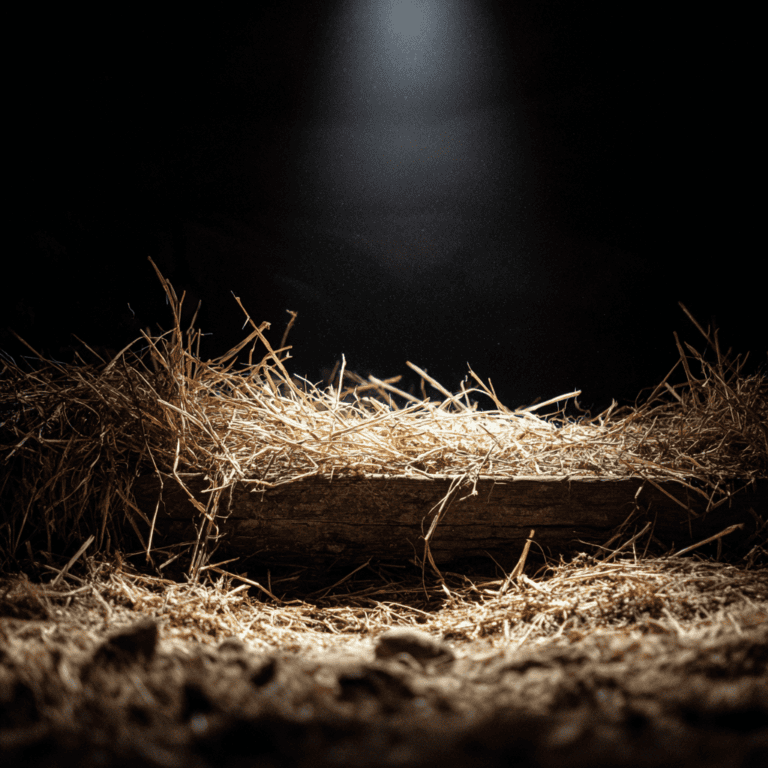

An earthquake is not what most of us imagine when we think about Easter.
We picture lilies, bright music, and tidy joy. And those things matter. But in Matthew’s telling of the resurrection, the first sign that grace has arrived is not calm—it’s chaos. The ground shakes. A stone meant to seal death is violently moved. The systems meant to keep things orderly collapse under the weight of something God refused to keep contained.
That detail matters, especially if the ground under your own life has felt unstable lately. The unbound grace of Easter doesn’t arrive to polish what’s broken. It arrives to disrupt what we thought was permanent.
And maybe that’s exactly the kind of grace we need.
When Life Already Feels Like It’s Shaking
You don’t have to look far to know what it feels like when stability disappears.
Some of us wake up carrying grief that doesn’t have words yet. Others live with a bone-deep exhaustion sleep can’t touch. Many of us feel a low, constant anxiety—about our bodies, our relationships, our world, or a future we once imagined would look different.
If that’s you, Easter can feel complicated. We want hope. We also know how fragile things are.
The good news is this: Easter was never meant for people who had it all together.
The First Witnesses Were Not Expecting a Miracle
Matthew tells us that Mary Magdalene and the other Mary came to the tomb “just to see it.” They weren’t carrying resurrection hope. They were carrying grief.
That detail is quietly compassionate.
Grief rarely comes with a plan. Sometimes you just go—to a place, a memory, a moment—because not going feels worse. That’s where these women are. They expect a sealed stone. Roman guards. The long, ordinary work of mourning someone they loved.
They are not worshipping. They are not celebrating. They are simply showing up.
And it turns out grace has been waiting for exactly that.
Grace Was Never Trapped in the Tomb
Here’s the part of the story we often miss because we’re rushing toward the alleluias.
The earthquake isn’t for Jesus.
By the time the stone is rolled away, Jesus has already risen.
The angel doesn’t move the stone to let Jesus out, but to let the women see. Grace was never actually contained by death, empire, or fear. The tomb didn’t hold resurrection. It only revealed that resurrection had already happened.
This is where the unbound grace of Easter reshapes the story—not just then, but now.
- Grace is not controlled by systems
- Grace is not limited by what looks finished
- Grace does not wait for permission from power or certainty
What felt sealed in your life was never as final as it looked.
Fear and Great Joy Can Coexist
Matthew says the women leave the tomb with fear and great joy.
Both. At the same time.
Scripture doesn’t rush to resolve that tension, and that honesty matters. Resurrection doesn’t erase fear. It complicates it. Everything has shifted. The world they knew is gone. Of course there’s fear—nothing will ever be the same.
And yet, joy is real too. Grace has risen. Death did not get the final word.
If you find yourself holding both, you are not failing Easter. You are inhabiting it.
Faith after trauma, loss, or deconstruction often feels like this—hope threading its way through uncertainty. Resurrection doesn’t demand emotional resolution. It meets us exactly where we are.
Resurrection Grace Meets Us on the Road
Here’s another tender detail.
Jesus doesn’t wait at the destination.
He meets the women on the road, in the middle of their fear, before their feelings have settled into something tidy. He doesn’t correct them or explain everything. He simply says, “Greetings.”
That’s what resurrection grace does. It interrupts our movement forward—not to overwhelm us, but to accompany us.
The risen Christ shows up before certainty. Before clarity. Before we’ve decided what we believe next.
That matters for anyone rebuilding faith.
“Come and See” Comes Before “Go and Tell”
The angel gives the women a sequence, and the order matters: Come and see. Then go and tell.
They are invited to look honestly at the place where death was laid before announcing anything hopeful. The grief is not erased from the testimony. It becomes part of it.
This is deeply good news for people who have been taught to rush past pain in the name of belief.
Resurrection does not require denial. It invites honesty.
Throughout Lent, many of us have practiced that same movement—coming and seeing the hard things we would rather avoid:
- doubts that wouldn’t stay quiet
- faith that no longer fit
- harm we hadn’t named
- grief we tried to spiritualize away
And over and over, grace showed up there too.
Not fixing everything. Not wrapping it in certainty. But present. Alive. Unbound.
Easter Is Not an Ending—It’s a Beginning
This story does not close with everything resolved.
It opens into something new.
The unbound grace of Easter doesn’t hand us a finished future. It hands us movement—fearful, joyful, uncertain movement—toward life we haven’t fully imagined yet.
If something in your life feels sealed and final, Easter tells the truth gently but firmly: appearances are not the whole story.
Grace has already risen.
So here’s a question to carry with you:
What might change if you trusted that grace is already at work—before the stone moves, before certainty returns, before everything feels safe?
If this reflection met you where you are, share it with someone who might need permission to approach Easter gently. Resurrection hope is meant to be passed along.